SABi
Intelligent Aging for Access Partners | 2025 | UX Case Study
PROJECT OVERVIEW
Scope
Alongside my four team members, we aimed to explore the needs and aspirations of older adults for safe and successful in-home assistance. In-home ageing is a growing social and governance challenge, with one in five Australians projected to be over 65 by 2066. Current assistive technologies are often one-size-fits-all and do not address the diverse needs of older adults living independently. This project focused on creating a holistic, user-centred system that enhances everyday living, designing an intuitive, accessible, and adaptable assistive experience tailored to individual abilities, emphasising sensory engagement, comfort and autonomy while enabling older adults to age in place safely.
Process
To understand the needs of older adults, our team conducted a comprehensive research program, including interviews, in-home observations, and probing diary studies to capture daily routines, pain points and aspirations. Insights from this research were used to develop user personas and journey maps, highlighting challenges such as reduced eyesight, hearing limitations, mobility restrictions and cognitive impairments. We designed low-fidelity prototypes in Figma to explore layout, interaction flows and accessibility features. These prototypes were iteratively tested with our target users at the Evergreen Centre Balwyn, refining bathroom controls, reminders, emergency features and assistive devices based on feedback.
Solution
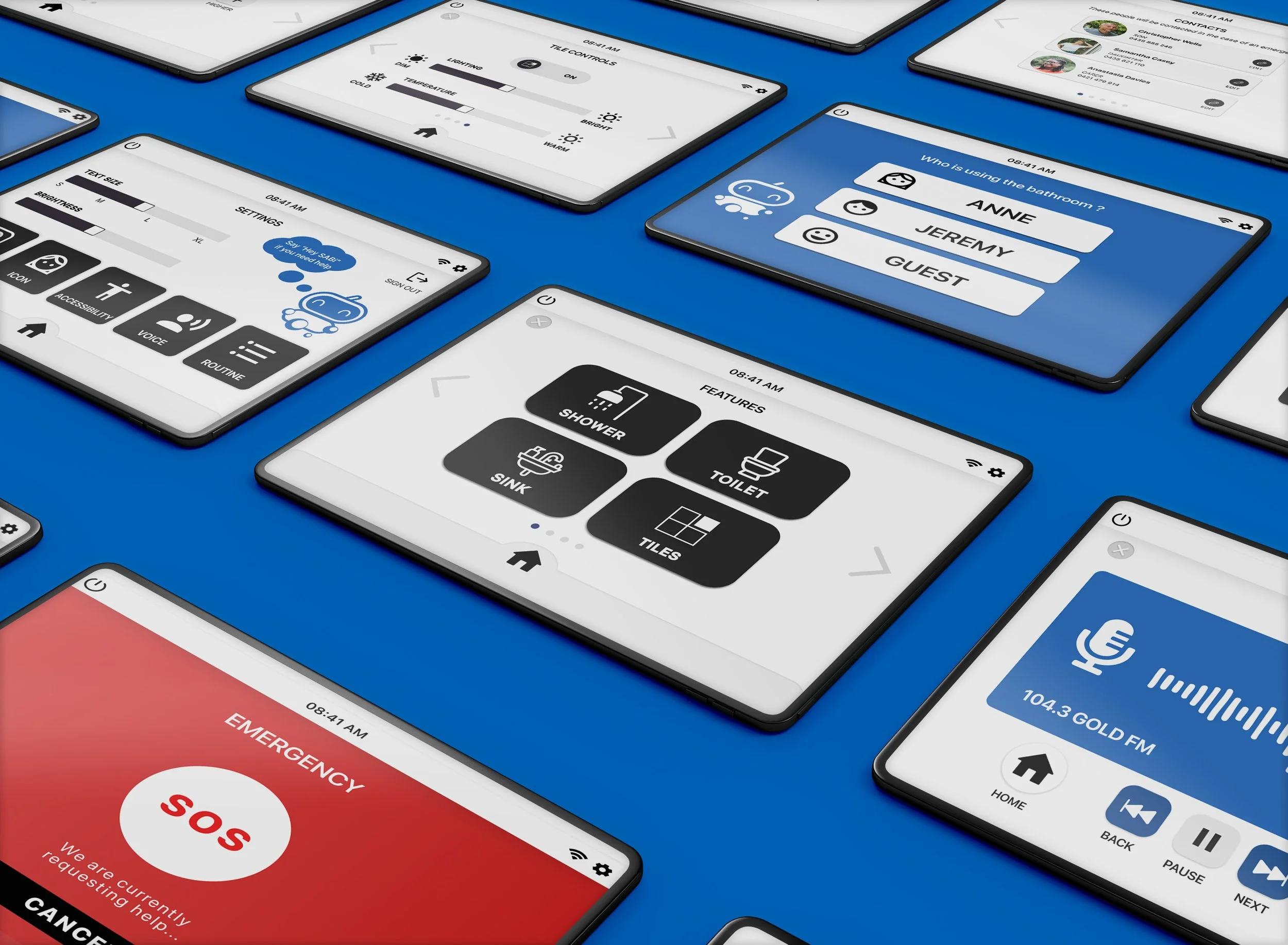
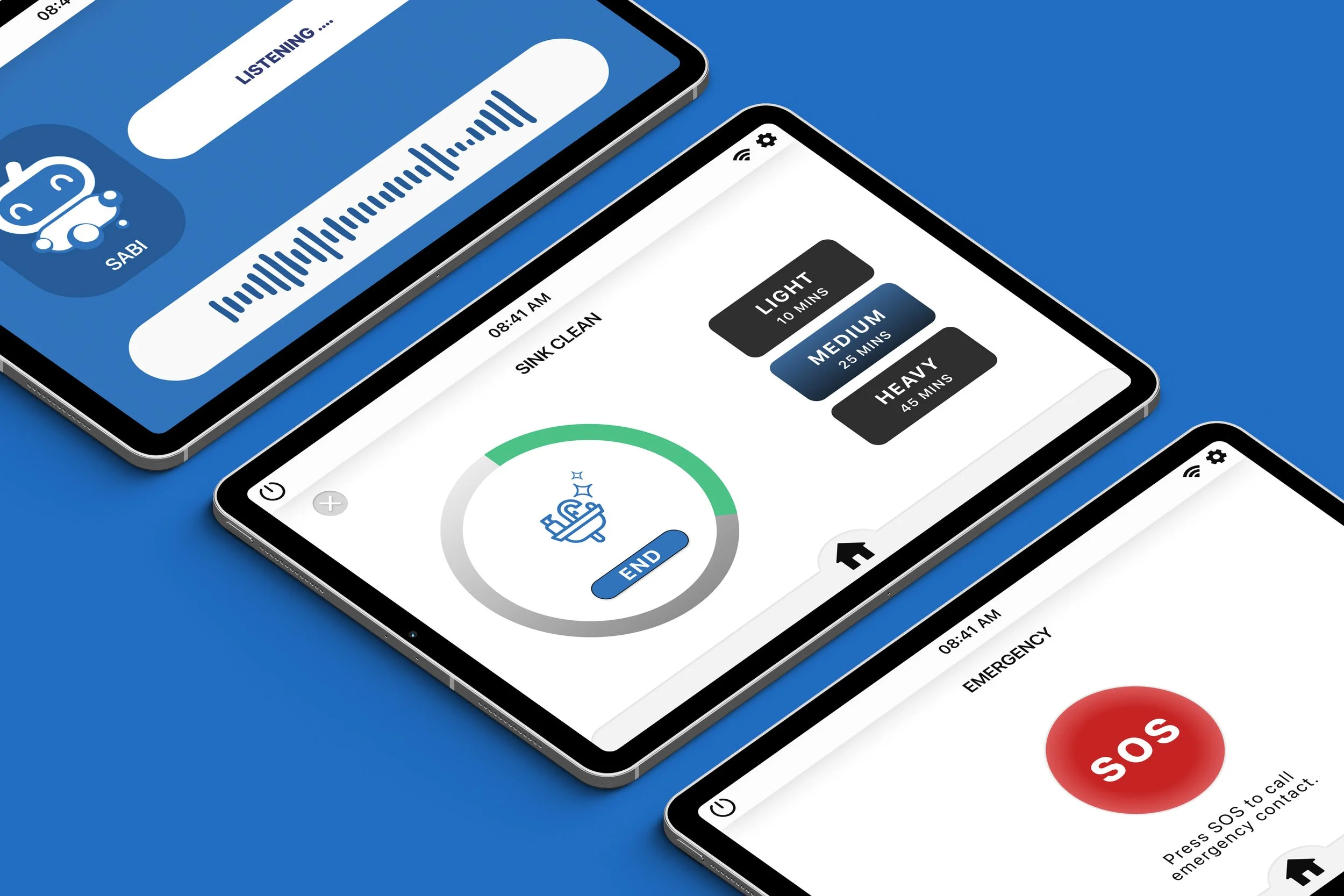
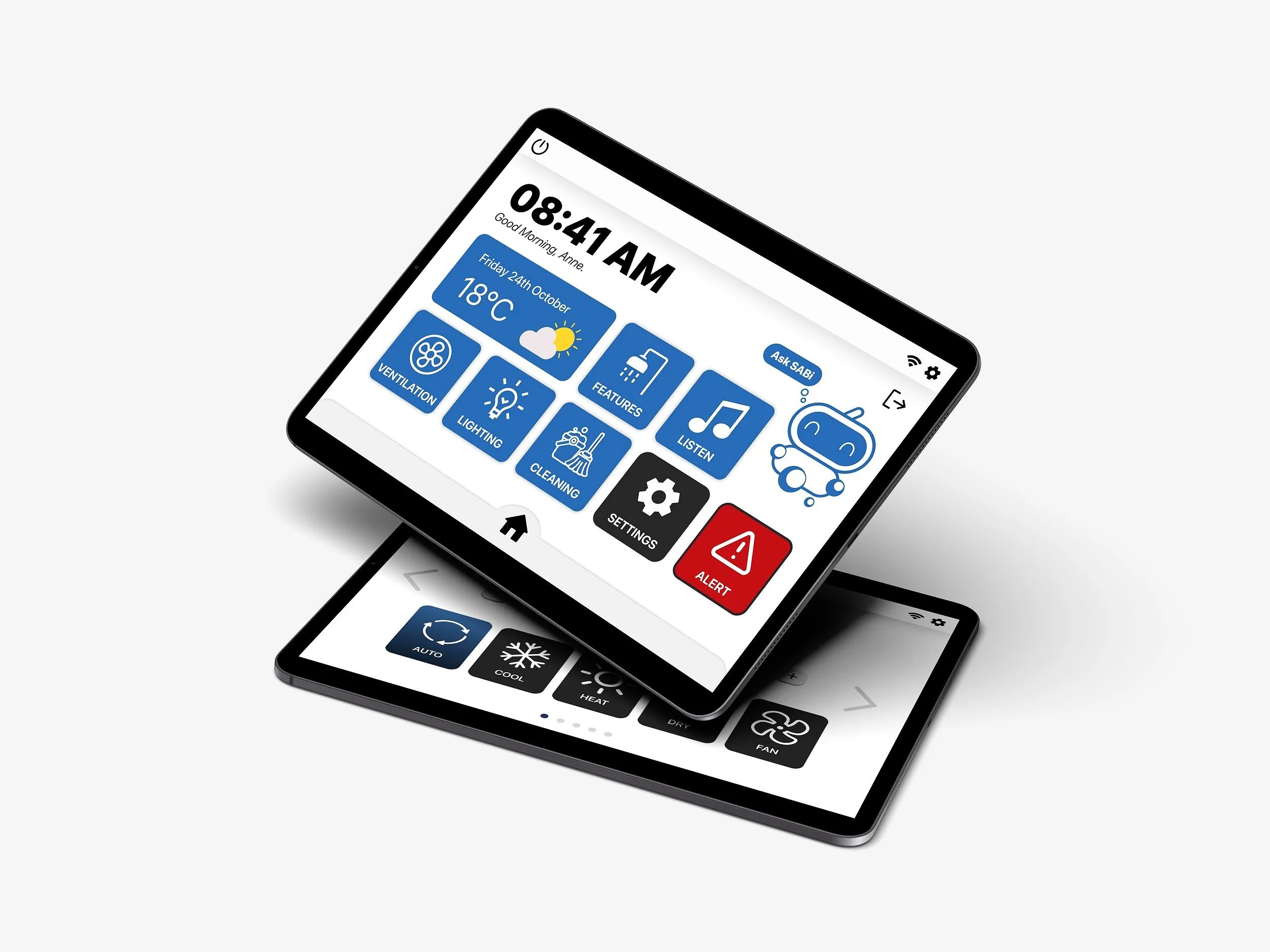
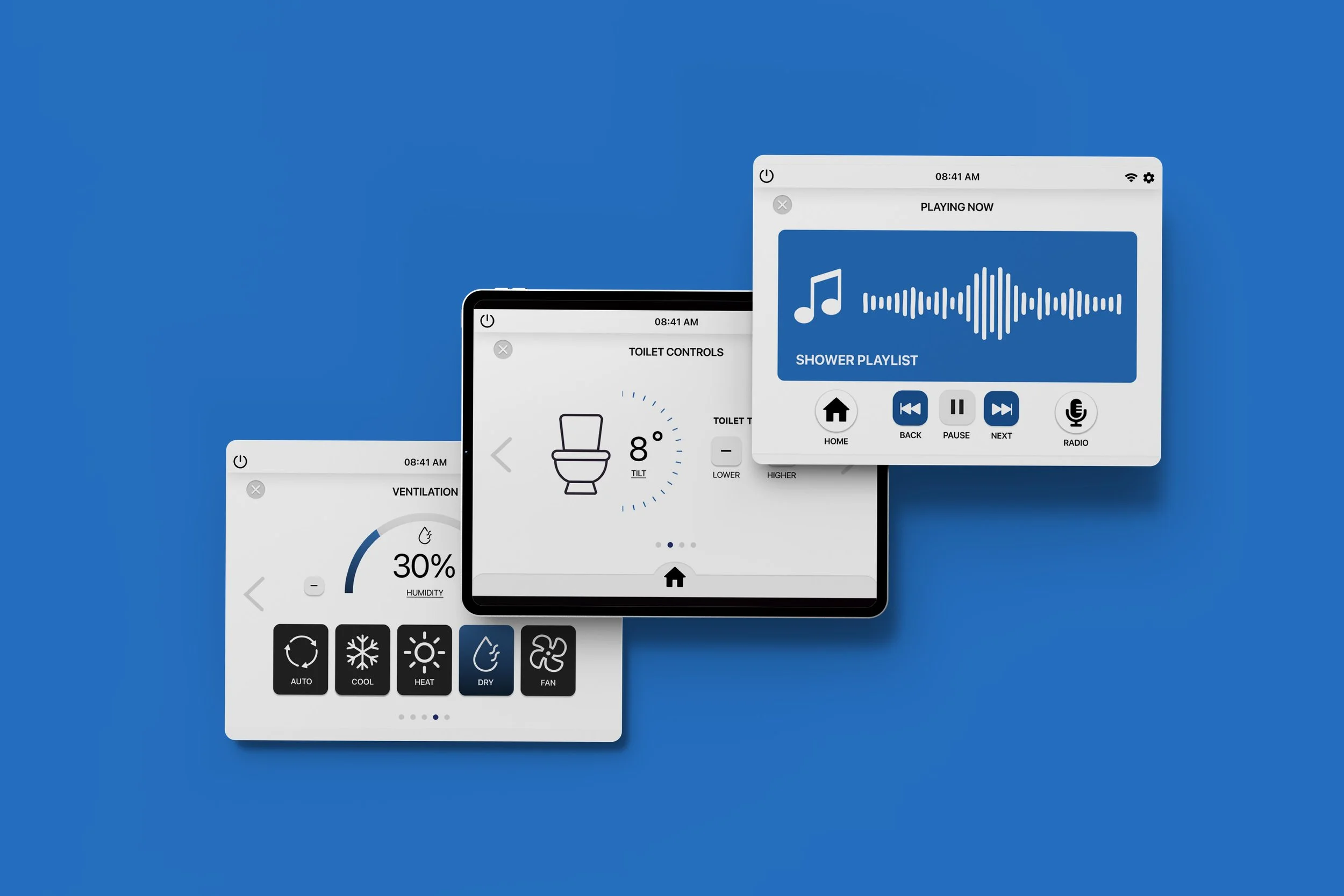
SABi is a fully integrated smart bathroom assistant designed to support older adults in managing their daily routines safely, independently and with dignity. The system combines voice and tablet controls to manage lighting, water flow and temperature, as well as assistive devices, while providing reminders and alerts to enhance safety. Wall-mounted tablet controls are optimised for accessibility, with large buttons and simple layouts, and the design accommodates a range of abilities and challenges, including mobility, vision, hearing and cognitive limitations. Prioritising reliability, personalisation and ease of use, SABi provides ongoing support and empowers older adults to carry out daily tasks confidently while maintaining their dignity and autonomy.

THE DESIGN PROCESS
As team leader for this project, I was responsible for keeping the group focused, organised, and accountable throughout the process. As lead designer, I created the bulk of the Figma prototype, shaping the interface and user experience from these research insights. By combining hands-on design with decisive leadership, I ensured the project stayed on track while delivering a cohesive, user-centred solution that met our Intelligent Ageing brief.
UNDERSTANDING THE ISSUE
What Pain Points Do Older Adults Experience in the Bathroom?
In our primary research, we engaged with older adults to understand their daily bathroom routines, focusing on mobility, safety, and accessibility. These sessions helped identify core pain points that informed the design of an intuitive and supportive in-home bathroom assistant.
Key insights include:
Showering, using the toilet, and brushing teeth are the most common tasks, with participants reporting 5-6 visits per day.
Slippery floors, poor lighting, and awkward toilet or shower layouts were major safety concerns.
Ageing impacts mobility, strength, vision, and hearing, with some participants having recent injuries affecting access.
All participants had some form of assistive technology; 50% would use new technology with training, 25% preferred traditional solutions, and 25% would use technology with regular assistance.
Participants wanted higher toilets, curved corners, non-slip floors, and easy-to-clean surfaces.
Frequently used items were kept within reach to reduce effort and strain.
Most participants used devices such as tablets or smartphones
DEFINING GOALS
How Can We Simplify and Condense Key Insights into Goals?
Using insights from interviews, in-home observations, and probing diary studies, we identified numerous challenges older adults face in the bathroom, particularly around safety, accessibility, and ease of use. To simplify and condense these findings into actionable goals, we prioritised the issues with the greatest impact on daily routines.
The key design goals included:
Minimise slips, falls, and other hazards through accessible and intuitive controls.
Ensure features accommodate a range of physical, visual, and cognitive abilities.
Make the system easy to understand and use, reducing effort for daily tasks.
Enable older adults to complete bathroom routines confidently and autonomously.
Provide a consistent, dependable system that users feel comfortable adopting.
IMPLEMENTED SOLUTIONS
Through our research and observations, we identified several key pain points in older adults’ bathroom experiences and focused our improvements on these areas:
Pain Point #1: Daily bathroom routines were impacted by mobility limitations, slippery floors, and awkward toilet or shower layouts, making tasks unsafe or difficult to perform.
We designed SABi, a fully integrated smart bathroom assistant to improve safety and accessibility. Features include voice and tablet controls for lighting, water pressure, temperature, toilet tilt, as well as intuitive reminders and alerts. Accessible design elements, such as large buttons, floor sensors, curved corners, and non-slip tiles, were incorporated to support a range of abilities and reduce the risk of accidents.
Pain Point #2: Participants struggled with reach and effort, needing frequently used items within easy access to complete daily routines comfortably.
SABi allows users to personalise the interface and interactions, ensuring controls and reminders are positioned for minimal effort. Tablet and voice interfaces are optimised for ease of use, supporting confidence and independence while reducing strain during daily routines. Users can adjust their controls using voice commands or the wall-mounted interface, or request assistance from close contacts to edit settings remotely.
Pain Point #3: Older adults were open to adopting technology but required reliability, reassurance, and emergency support to trust and engage with new systems.
SABi provides reliable and user-friendly interactions, integrating with existing assistive devices and offering consistent feedback. For emergencies, a dedicated safety button allows users to quickly alert contacts or SABi support workers. Remote assistance is also available, enabling users to receive guidance or help from trusted contacts or trained staff as needed. Clear visual layouts, accessible controls, and guided prompts ensure users feel confident and maintain their dignity while using the system.